
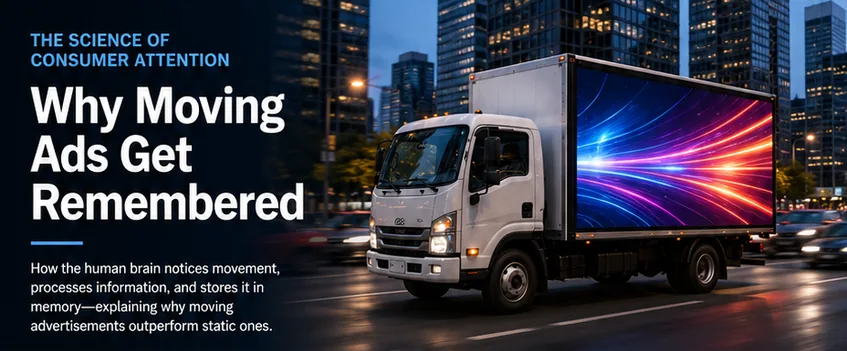
Every day, the average consumer is exposed to thousands of marketing messages. From social media feeds and digital billboards to storefront signs and television commercials, brands compete relentlessly for one limited resource--human attention.
Yet, despite this constant exposure, only a small fraction of advertisements are actually remembered.
The reason isn't simply creativity or budget. It's neuroscience.
Long before someone recognizes a logo or remembers a slogan, the human brain makes a split-second decision about whether something deserves attention. One of the strongest triggers influencing that decision is movement.
Understanding how the brain processes motion can help marketers create campaigns that naturally capture attention, improve memory recall, and generate stronger brand recognition.
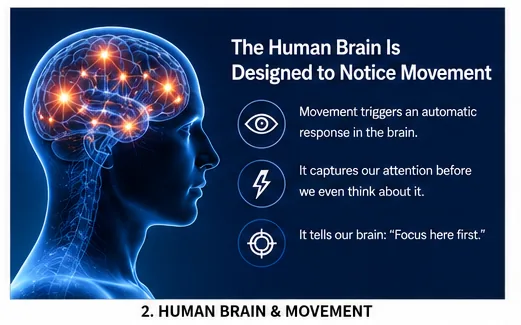
Our brains evolved to prioritize movement because it could signal opportunity--or danger.This built-in survival mechanism still influences how we process the world today. Movement triggers an automatic response in the brain. It captures our attention before we even think about it. It tells our brain: "Focus here first."
We are exposed to thousands of visual stimuli every day, but our brains can't process everything. It filters, selects, and prioritizes. A moving advertisement, however, interrupts this filtering process. Because its position changes within the environment, the brain treats it as new information, giving it priority in visual processing. This is why movement naturally refreshes attention without requiring consumers to make a conscious decision.
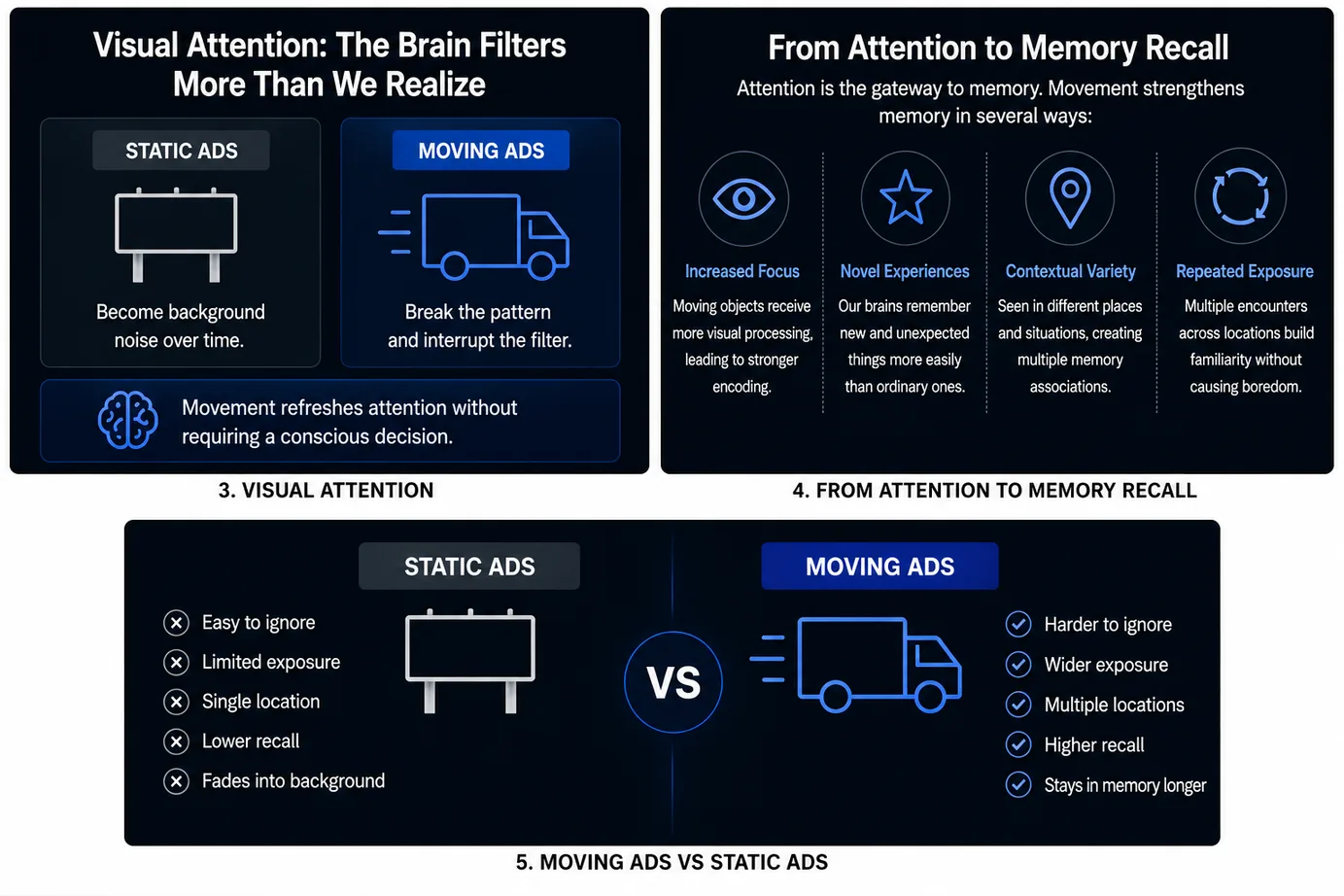
Attention is the gateway to memory. When something captures our attention, the brain has a better chance to encode and store that information.
Movement strengthens memory in several ways:
When we combine attention science and memory psychology, it's clear why moving ads make a bigger impact. They interrupt the environment and capture attention. They reduce habituation and banner blindness. They create novel, share-worthy moments. They are seen in multiple locations and contexts. They lead to higher recall and stronger brand recognition.
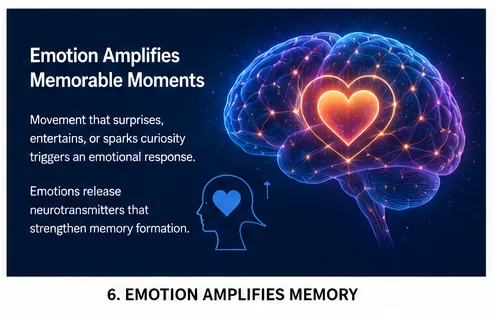
Attention isn't driven by movement alone. Emotion also influences memory. This is why creative moving campaigns often become conversation starters. People don't simply notice them.They remember them. And sometimes, they share the experience with others.
Key Takeaway
Successful communication doesn't fight against human psychology--it works with it.
Movement naturally captures attention.
Attention improves information processing.
Meaningful experiences strengthen memory.
Repeated exposure in varied contexts enhances recall.
Understanding how people notice, process, and remember information helps marketers create campaigns that leave lasting impressions.